Source Gold Ring Bracelet and Pendant Set for Wedding Gifts
Explore 30 listings for the gold ring bracelet and pendant set, featuring options in stainless steel, metal alloy, and copper. Buyers can compare customization, plating styles, and certifications like SGS and CE to find suitable pieces for anniversaries, parties, and weddings.
Key considerations
Products List




Comprehensive Sourcing Guide
Gold Ring Bracelet and Pendant Set Sourcing Guide
Sourcing a coordinated gold ring, bracelet, and pendant set requires careful attention to material consistency and finish durability. Buyers must verify that all components share the same base metal, such as stainless steel or metal alloy, to prevent discoloration or allergic reactions. The observed market data indicates a strong preference for gold plating, often combined with rose-gold accents, which demands rigorous quality checks on plating thickness and adhesion. Without uniform material specifications, the set may appear mismatched or degrade quickly, leading to customer dissatisfaction and returns.
Procurement teams should also evaluate the customization capabilities of potential suppliers, as many offer OEM and ODM services to tailor designs for specific brand identities. The availability of independent packaging and export cartons suggests that logistics efficiency is a key factor in maintaining product integrity during transit. Buyers need to confirm whether the supplier can handle complex assembly requirements, such as attaching pendants to chains or setting stones in rings, while maintaining the "fashion" or "simple" style aesthetics that drive current consumer demand in this category.
Product Scope and Observed Listing Signals
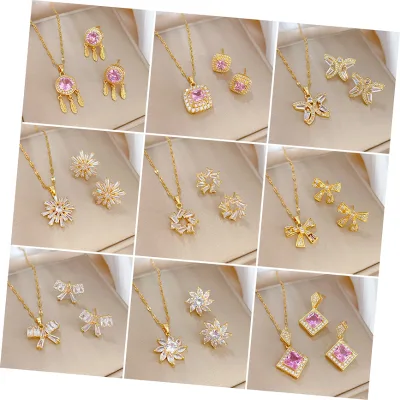
The current market landscape for these jewelry sets reveals a diverse range of styles, from Korean-inspired designs to simple, minimalist aesthetics. Listings frequently highlight applications for weddings, parties, and anniversaries, indicating that these items are positioned as significant gifts rather than casual accessories. The observed price range of $0.7 to $29.5 USD suggests a wide spectrum of quality tiers, where lower prices may correlate with thinner plating or less durable base materials. Buyers must discern whether the listed price includes the full set or just individual components, as this significantly impacts the true cost per unit.
Minimum Order Quantities (MOQ) vary considerably, with some suppliers requiring as few as two pieces while others demand 200 sets or more. This variability allows small businesses to test market demand with low risk, whereas larger retailers can negotiate better terms for bulk purchases. The presence of customization options, such as logo printing and specific packaging like OPP bags or gift boxes, adds value for brands seeking to enhance their unboxing experience. Understanding these signals helps buyers align their inventory strategy with their target market size and budget constraints.
Technical Specifications to Verify
Verifying the exact model numbers and material compositions is critical to ensuring product consistency across large orders. Suppliers often list multiple models, such as HDX20121004 or JYS2021071208, each with distinct specifications like weight, length, or jewelry type. For instance, some sets may feature necklaces and earrings, while others focus on bracelets and rings. Buyers must request detailed spec sheets that confirm the base material, whether it is stainless steel, copper, or metal alloy, and ensure that the gold plating process, such as rose-gold plating and polishing, meets their durability standards.
Dimensional accuracy and adjustability are also key technical factors, especially for bracelets and necklaces that must fit various wrist and neck sizes. Some listings specify adjustable lengths, such as 45+5 cm, which enhances usability but requires precise manufacturing tolerances. Additionally, the weight of the components, ranging from 16g to 80g, affects both the perceived value and the shipping costs. Buyers should verify that the stated weights are accurate and that the packaging dimensions align with their logistics requirements to avoid unexpected freight charges.
Compliance and Safety Documentation
Safety compliance is non-negotiable for jewelry sold in international markets, particularly regarding heavy metal content. Buyers must ensure that all products are lead-free, nickel-free, and cadmium-free to meet regulatory standards in regions like Europe and North America. Certifications such as SGS, CE, BSCI, BV, and Intertek provide evidence that the supplier adheres to strict quality and safety protocols. These documents should be verified for validity and relevance to the specific product materials, as counterfeit or outdated certificates pose significant legal and reputational risks.
Beyond material safety, ethical sourcing and labor practices are increasingly important to consumers and regulators. Certifications like BSCI demonstrate that the supplier follows responsible business conduct guidelines, which can be a competitive advantage in marketing. Buyers should request recent audit reports to confirm that the manufacturing facilities maintain safe working conditions and fair labor practices. This due diligence not only mitigates risk but also aligns the brand with modern consumer expectations for ethical production.
Cost Drivers and Commercial Terms
The final cost of a gold ring, bracelet, and pendant set is influenced by several factors, including material costs, plating thickness, and packaging complexity. Gold plating, especially rose-gold finishes, adds significant value but also increases production costs. Buyers should clarify whether the quoted price includes the cost of custom packaging, such as gift boxes or branded OPP bags, as these can add substantial overhead. Understanding the breakdown of costs helps in negotiating better terms and avoiding hidden fees that can erode profit margins.
Shipping methods and logistics terms also play a crucial role in the total landed cost. Suppliers often offer multiple shipping options, including DHL, UPS, FedEx, and EMS, each with different speed and cost profiles. Buyers should evaluate the trade-off between faster shipping and higher costs, especially for time-sensitive orders like holiday collections. Additionally, payment terms and currency exchange rates can impact the final price, so it is advisable to lock in rates and terms early in the negotiation process to ensure budget stability.
Supplier Qualification and Quality Control
Selecting a reliable supplier involves assessing their production capacity, quality control processes, and responsiveness to customization requests. Suppliers with OEM and ODM capabilities are often more flexible but require closer oversight to ensure that design specifications are met. Buyers should request samples to evaluate the finish, clasp strength, and overall craftsmanship before placing a bulk order. This step is essential for identifying potential defects, such as uneven plating or loose settings, that may not be apparent in product photos.
Quality control should extend beyond the initial sample stage to include in-process inspections and final random checks. Buyers should inquire about the supplier’s defect rate and their policy for handling non-conforming products. A robust quality control system includes testing for durability, such as pull tests for chains and rings, and chemical tests for plating adhesion. Establishing clear communication channels and regular updates ensures that any issues are addressed promptly, minimizing delays and maintaining supply chain continuity.
Long-Term Procurement Checks
Building a sustainable supply chain requires ongoing monitoring of supplier performance and market trends. Buyers should regularly review supplier metrics, such as on-time delivery rates, product quality consistency, and responsiveness to inquiries. This data-driven approach helps in identifying potential risks early and making informed decisions about continuing or diversifying the supplier base. Additionally, staying updated on changes in regulations, such as new restrictions on certain metals or packaging materials, ensures continued compliance and avoids costly disruptions.
Long-term relationships with suppliers can lead to better pricing, priority production, and collaborative innovation. Buyers should invest in building trust through fair payment practices and clear communication, which encourages suppliers to prioritize their orders. Furthermore, exploring new product lines or styles, such as eco-friendly materials or unique designs, can help keep the brand competitive. By maintaining a proactive approach to procurement, buyers can secure a steady supply of high-quality gold ring, bracelet, and pendant sets that meet evolving consumer demands.
FAQs
What materials are used for the gold ring bracelet and pendant set?
The sets are crafted from stainless steel, metal alloy, and copper. These materials provide durability and a premium feel. The jewelry is plated in gold or rose gold for aesthetic appeal. All items are lead-free, nickel-free, and cadmium-free, ensuring safety for sensitive skin while maintaining a fashionable style suitable for various occasions.
Can I customize the gold ring bracelet and pendant set with my logo?
Yes, customization is available for these jewelry sets. OEM and ODM services are welcome, allowing you to add your specific branding. You can request custom logos printed on the items. The supplier supports independent packaging and export carton options. This flexibility ensures the final product aligns perfectly with your brand identity and marketing needs.
What certifications do the gold ring bracelet and pendant sets have?
The products hold SGS, CE, BSCI, BV, and Intertek certifications. These standards verify quality and compliance with international regulations. The materials are tested to be free from harmful substances like lead and cadmium. This ensures the jewelry meets safety requirements for major markets. Buyers can trust the verified standards for ethical and safe sourcing practices.
What is the typical MOQ for ordering the gold ring bracelet and pendant set?
The minimum order quantity is typically 100 sets. Some listings indicate a range from 2 to 200 units depending on the specific model. This low MOQ allows for flexible trial orders. Buyers can start with smaller quantities to test market response. The supplier accommodates various order sizes to support different business scales effectively.
Where are the gold ring bracelet and pendant sets manufactured?
The products originate from Shenzhen and Zhejiang, China. These regions are known for strong manufacturing capabilities in jewelry. The supply chain is established for efficient logistics. Buyers can expect reliable production timelines from these locations. The geographic concentration supports consistent quality and competitive pricing for international orders.
How is the gold ring bracelet and pendant set packaged for shipping?
Items are packaged in OPP bags, PE polybags, or gift boxes. Each piece is often individually wrapped for protection. Export cartons are used for bulk shipments to ensure safety. The packaging is designed for independent logistics transportation. This method protects the jewelry during transit and maintains its pristine condition upon arrival.